Ten of Swords: The End of the Road and the Dawn of Consciousness
Mystical Introduction
The Ten of Swords is the image of absolute rest, but a rest that arrives through the dramatic culmination of an intellectual or situational process. Often feared for its raw visual representation, this card is not an announcement of physical death, but the proclamation of an irreversible end. It is the air that finally stills after the storm; it is the moment when the mind, exhausted from fighting ghosts and half-truths, surrenders to reality. In the cosmology of La Bruja Oracle, the Ten of Swords represents the "death of the intellectual ego," the point where there is no more room for excuses, defenses, or projections.
If the Nine of Swords was the torment of anticipation and nightmare, the Ten is the cold awakening on the battlefield. It is the realization that the cycle has ended. But paradoxically, in its darkness lies the seed of the greatest hope: when you have touched the absolute bottom, the only possible path is up. This card is the universe's "enough," a surgical intervention of fate that cuts the threads that bound you to a narrative of pain that no longer belongs to you. It is, in essence, the card of final liberation.
In the ancient scrolls of occult wisdom, the Ten of Swords is described as the moment when the air becomes so dense that it can no longer sustain the flight of lies. It is the gravity of Truth pulling the soul toward the earth. There is no sadness in this card for one who knows that every end is the door to a new kingdom. The fallen knight is not a victim of cruelty, but an initiate who has completed the bitter journey of the swords and is now ready to be reborn in the realm of the spirit, where steel no longer has power.
Symbolic Analysis
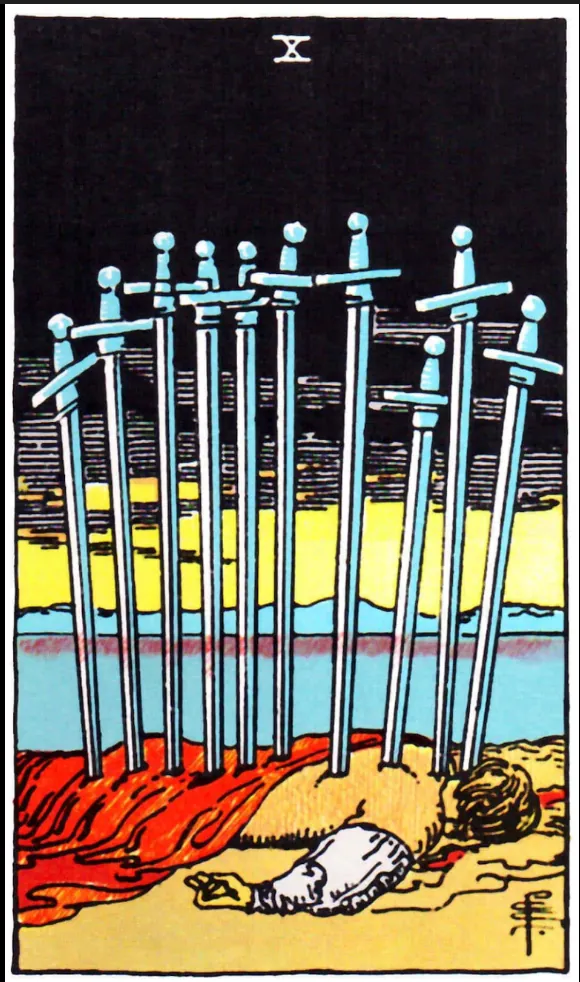
The iconography of the Ten of Swords in the Rider-Waite-Smith deck is one of the most powerful and laden with esoteric symbolism. Each element is designed to convey a sense of finality and, simultaneously, transition:
- ✦The Prostrate Figure: A man lies face down, pierced by ten swords running down his spine and back. Lying face down suggests a total defeat of the external will, but also a surrender to the earth, to the material. Rachel Pollack noted that the swords appear to be driven into the energy centers or posterior chakras, suggesting that what has died is our way of processing energy and thought in the world. The position also indicates that the blow came from behind, symbolizing betrayals or events we did not see coming because we were too busy looking at our own shadows.
- ✦The Ten Swords: The number ten represents the fulfillment of a cycle (as in the Tree of Life in Kabbalah, reaching Malkuth, the Kingdom). There is no eleventh sword because it is not needed; the destruction of the old structure is complete. Their orderly arrangement suggests that this end is not chaotic, but the logical result of a series of events or thoughts. They represent the culmination of the intellect which, by trying to solve everything through logical thought, ends up paralyzing life itself.
- ✦The Black Sky and the Golden Dawn: This is the most crucial detail. While the top of the sky is an impenetrable black (the void of ignorance or grief), on the horizon a strip of golden and yellow light can be seen. The sun is rising. This tells us that the tragedy has occurred during the night and that the seeker is waking up to a new reality. Darkness is temporary; light is eternal. It is the biblical promise that "joy comes in the morning."
- ✦The Calm Sea: Behind the figure, the water (emotions) is completely flat and serene, of a deep dark blue. This indicates that despite the apparent violence of the intellectual end, the emotions have reached a state of peace or numbness. There are no longer waves of passion or doubt; only the stillness of acceptance remains. The tides of the soul have quieted because there is nothing left to fear.
- ✦The Gesture of the Right Hand: If observed closely, the man's right hand forms a sign that some interpret as the "Pana-Mudra" gesture or a secret blessing. This suggests that even at the moment of "defeat," there is a spiritual awakening or a recognition of a higher truth. It is the soul saying: "Father, into your hands I commend my spirit."
- ✦The Red Cape: The color red symbolizes passion, blood, and the life that now spills onto the earth. It is the sacrifice of personal desire on the altar of Universal Truth. The red against the dark earth is a reminder that our humanity is the most valuable thing we leave behind when we ascend to spiritual understanding.
Upright Meaning
General Interpretation
When appearing upright, the Ten of Swords indicates that a situation has reached its absolute limit. There is no more to do, no more to discuss, and no way to go back. It is the card of "accepted defeat." It often appears when the seeker feels betrayed, "stabbed in the back," or simply exhausted by a situation that has drained all their energies. It is the climax of a story that no longer has pages to write.
However, the message is profoundly liberating: the worst is already over. There are no more swords that can hurt you. The cycle of pain has concluded and now the cleaning process begins. It is a call to stop fighting against the inevitable and allow what must die to die. it is time to let go of the victim identity and start looking toward the golden horizon where the sun rises. In La Bruja Oracle, we say that this card is the universe's permission to surrender without guilt. You have fought well, but the war is over. Now it is your turn to heal.
In Love
In love readings, the Ten of Swords is usually a sign of a definitive breakup or the death of an illusion within the couple. It is not a card of "crisis," it is a card of "final point."
- ✦If you have a partner: It may indicate a betrayal that breaks the bond irreparably or, in a subtler sense, the end of a stage of destructive conflict. The time to try to "fix" what is broken at the root is over. It is time to accept that the relationship, as you knew it, has ended. Sometimes, this allows for a rebirth if both are willing to die to their old patterns, but usually, it marks the time to pack your belongings and leave.
- ✦If you are single: It represents the final closure of mourning for a past love. Finally, you stop being "the wounded person" to become someone who has survived the storm. It is the moment when you stop looking for answers in the past and open yourself to the possibility of a new dawn. The swords of ex-lovers no longer have an edge over your present.
In Work and Finance
Professionally, this card can signal a dismissal, the closing of a business, or the total failure of a project. It feels like a devastating blow, but the Tarot reminds you that that path no longer had anything to offer you. "Failure" here is a forced redirection toward something that vibrates more with your truth. It is the fall of a workplace idol that kept you prisoner.
Financially, the Ten of Swords warns of significant losses or the recognition of a bankruptcy. It is vital to stop injecting energy (or money) into something that has already died. The recommendation is to cut losses immediately and prepare to rebuild from scratch on more solid and honest foundations. Do not try to save the ship that is already at the bottom of the sea; better to learn to swim toward the shore lit by the Gemini sun.
In Health
In terms of health, this card usually represents the total exhaustion of the nervous system or physical collapse due to accumulated stress. It is the body saying "enough." It can indicate problems in the back, the spine, or chronic diseases that reach a crisis point. Absolute rest is imperative and, often, a medical or therapeutic intervention that allows for total regeneration from the root. It represents the moment when the patient "hits bottom" and only from there can true healing begin, which is usually both spiritual and physical.
Reversed Meaning
General Interpretation
When the Ten of Swords is reversed, the message is of extraordinary resilience. It indicates that the seeker has survived what seemed to be their end and is beginning to rise. The swords begin to fall under their own weight and the figure stands up. It is the card of the survivor who, although still in pain, understands that life continues. It is the dawn that finally touches the skin and returns warmth to the bones.
However, in its shadow, it can indicate a resistance to accepting the end. The seeker clings to the remains of a dead situation, unnecessarily prolonging their own agony. It is like trying to reanimate a corpse; the effort is futile and only delays the true dawn. It can also signal a paralyzing fear that the pain will return, which prevents walking with a firm step toward the future.
In Love
- ✦If you have a partner: It can represent a reconciliation after a nearly fatal crisis, but only if both are willing to let their old egos die. If not, it is the sign that a toxic relationship is being dragged out for fear of loneliness, keeping the swords stuck by pure inertia.
- ✦If you are single: Indicates that you are slowly emerging from a deep romantic depression or a trauma of betrayal. You begin to withdraw the swords from your heart and to heal. The process is slow and there may be relapses, but the will to live and trust again is returning.
In Work and Finance
In the workplace, the reversal suggests that the worst of a crisis has passed. If you lost your job, you start to see new opportunities where before you only saw walls. If your business was in crisis, you find a way to save the essentials or to start something new with the valuable experience gained in "failure."
Financially, it indicates a slow recovery after a devastating loss. You begin to put your accounts in order and to emerge from the state of mental panic. It is a time of extreme caution, but with a clear direction toward stability. The mind frees itself from the obsession with lack and begins to look for creative solutions.
In Health
The reversal is a very positive sign of recovery. The body is finally expelling toxicity and treatments are starting to take effect. It is fundamental not to hurry; the back and the nervous system are still extremely sensitive. The focus should be on gentle rehabilitation, restorative sleep, and emotional nutrition that prevents stress from accumulating again.
Key Combinations
The Ten of Swords interacts with other cards to specify the nature of the end and what comes after:
- ✦Ten of Swords + The Tower: A sudden, violent, and absolutely necessary end. There is no warning. The structure collapses so that truth can emerge. Painful but deeply purifying; it is the lightning that breaks the swords.
- ✦Ten of Swords + Judgement: A second chance after a total defeat. It is the mystical resurrection; you leave your old self behind to be reborn on a higher octave. The angel's call lifts you from the earth.
- ✦Ten of Swords + Three of Swords: Deep betrayal leading to emotional collapse. The heart and mind are wounded simultaneously. A combination of great pain that requires much compassion, healthy isolation, and time to heal.
- ✦Ten of Swords + The Sun: The dawn is immediate and glorious. The tragedy is revealed as a blessing in disguise that frees you to live your greatest happiness. Light erases the memory of steel.
- ✦Ten of Swords + The World: The definitive closure of a difficult karma. You have learned the lesson through pain and no longer need to go through that cycle again. It is the graduation in the school of suffering.
FAQ: Frequently Asked Questions
1. Does the Ten of Swords announce someone's physical death? In modern Tarot practice and in La Bruja Oracle, almost never. It refers to the death of a situation, a belief, a project, or a stage of life. It is a symbolic and necessary death for the growth of the soul. The "death" here is the inability to continue with the same system of thought.
2. Why is it considered a "positive" card in La Bruja Oracle? Because it marks the definitive end of suffering. While the swords are in the air (as in the 9), there is fear and uncertainty. When all the swords are stuck, the drama is over. There is nothing more to fear. The relief of knowing that the worst has already passed is the first step toward happiness.
3. What is the difference between this card and Death (Arcanum XIII)? Death is a natural, organic, and often silent transformation. The Ten of Swords is an intellectual end, often noisy or dramatic, that feels like a collapse of the ego. Death is the change of season; the Ten of Swords is the car crash that forces you to walk.
4. What should I do if this card comes up as my advice for the day? Surrender. Stop fighting against that situation that keeps you awake. Accept that it has ended, that you don't have control, and that you have done everything you could. Rest on the earth, feel the sun rise on your back, and prepare to rise as a new person tomorrow.
May the weight of the swords be transformed into the wisdom of one who has walked through the valley of shadows and emerged stronger. Remember: when the sky is darkest, it is because the sun of consciousness is about to be born on your own internal horizon.
SHADOW WORK
The Sacred Question
"Am I so accustomed to "rock bottom" that I have stopped believing in the possibility of resurrection? How am I using my "collapse" as a way to avoid the responsibility of building a new and more honest life?"
POWER AFFIRMATION
The Decree
I accept the end with dignity and I rise toward a new and luminous dawn of truth.
Tarot Combinations
Discover how Ten of Swords interacts with other oracle energies
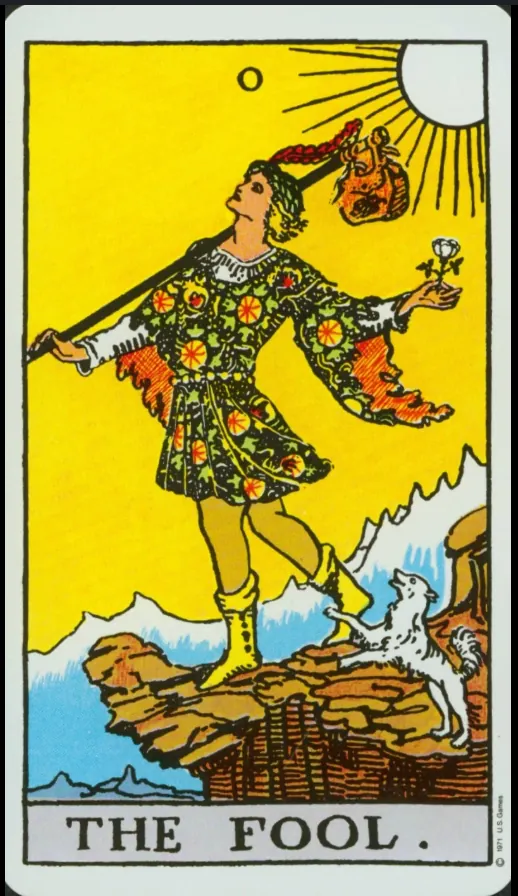
Ten of Swords + The Fool
Read Meaning →
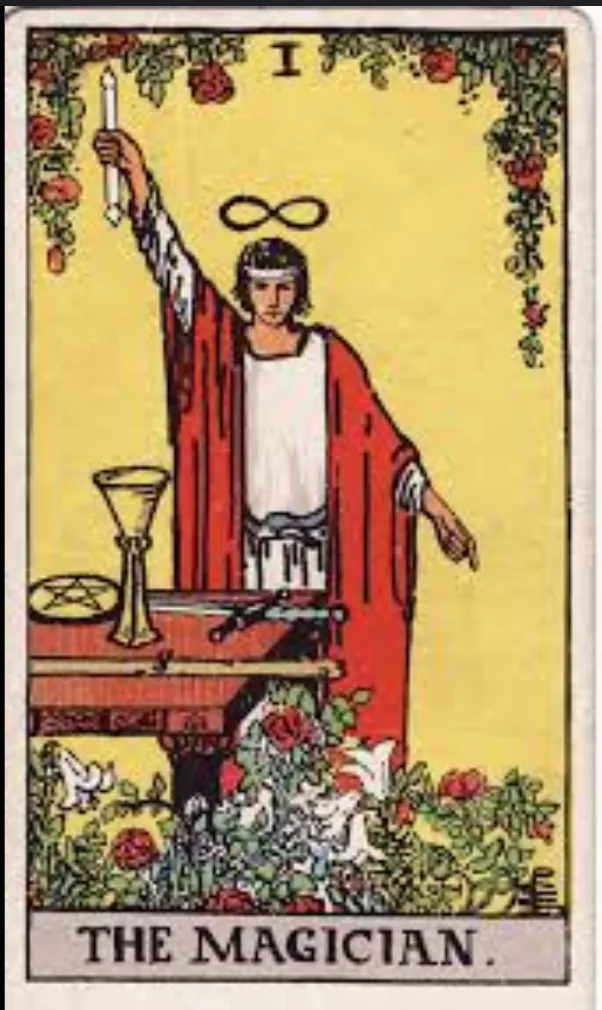
Ten of Swords + The Magician
Read Meaning →
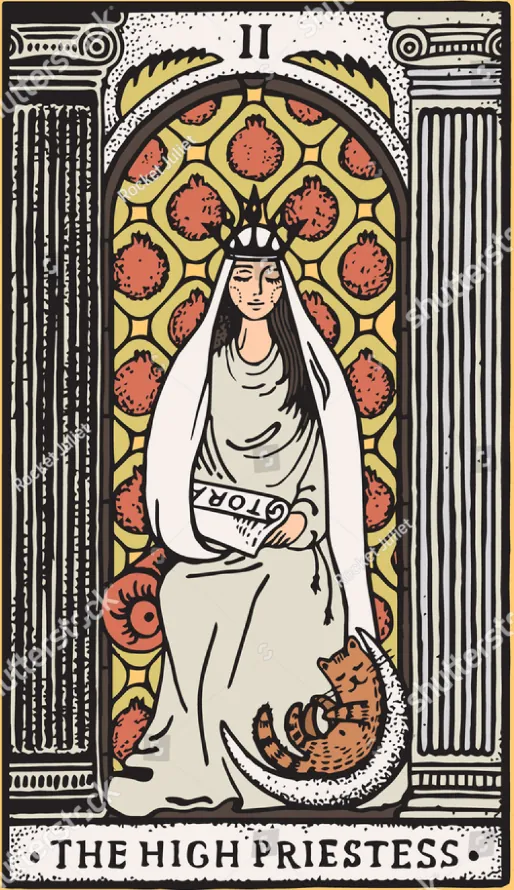
Ten of Swords + The High Priestess
Read Meaning →
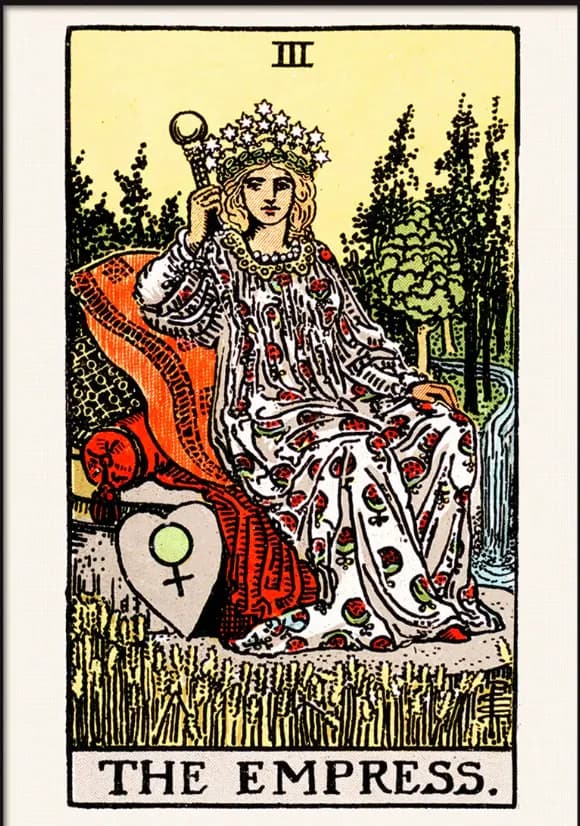
Ten of Swords + The Empress
Read Meaning →

Ten of Swords + The Emperor
Read Meaning →
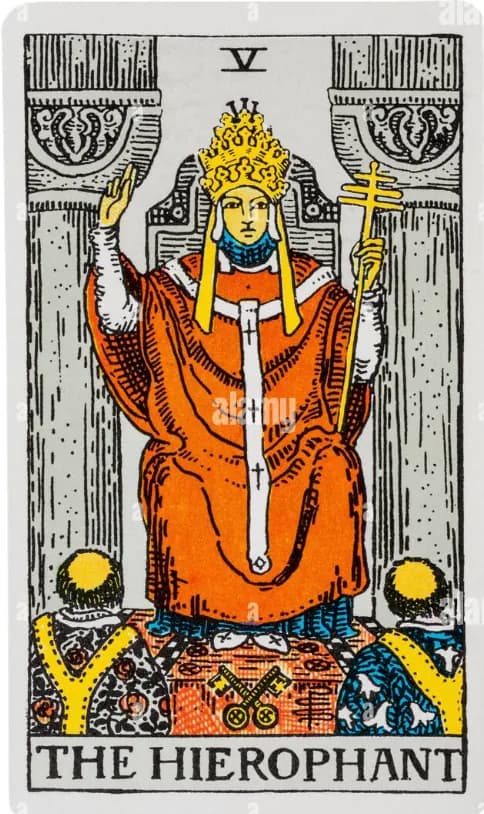
Ten of Swords + The Hierophant
Read Meaning →
All combinations with Ten of Swords
Library Echoes
Explore other master keys of destiny
Frequently asked questions
- What does Ten of Swords mean upright?
- Total collapse, rock bottom, end of a mental cycle, betrayal.
- What does Ten of Swords mean reversed?
- Recovery, resisting the inevitable end, a slow resurrection.
- What does Ten of Swords mean in love?
- Total collapse or a painful ending in a relationship. A period of deep sorrow that reveals the absolute truth about a bond. True healing is found in the ability to accept the end with dignity and to recognize that this collapse has cleared the ground for a more transparent future.
Your destiny is calling
You have decoded the essence of Ten of Swords, but Tarot has a personalized message for your current moment.